

Go Back
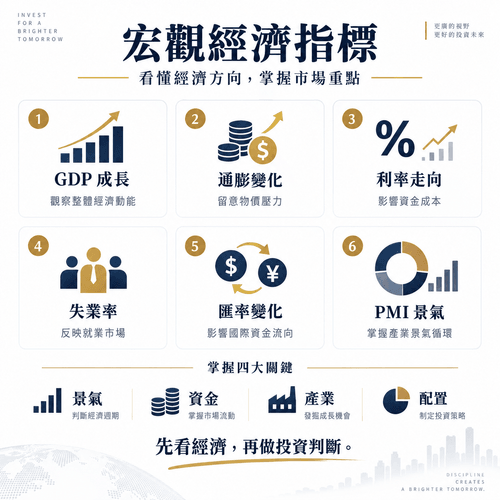
Macroeconomic Indicators
Market rises and falls are often related to the overall economic environment. Factors such as economic growth, inflation, interest rates, employment, exchange rates, and manufacturing sector health influence capital flows and the performance of various assets.
More Details
- GDP Growth Rate: Reflects the overall economic growth trend. During economic expansion, corporate profits are generally supported; if growth slows, it’s important to monitor economic risks.
- Inflation Indicator: Indicates price pressure. Excessive inflation may lead the central bank to maintain higher interest rates, impacting corporate costs and consumer purchasing power.
- Interest Rate Policy: Directly affects capital costs. Rising interest rates typically make the market more cautious; lowering rates can boost market liquidity and risk appetite.
- Unemployment Rate: Used to observe the strength of the employment market. Stable employment usually indicates economic and consumer support; a rapid rise in unemployment may signal an economic slowdown.
- Exchange Rate Trends: Affect import/export companies, overseas investments, and international capital flows, especially given Taiwan’s market sensitivity to USD fluctuations.
- PMI / Economic Indicators: Serves as a thermometer for future economic activity. A PMI above 50 generally indicates expansion, while below 50 suggests potential industry contraction.
Observe trends through economic data, find direction through market changes.
By continuously tracking global macroeconomic indicators, grasping economic cycles, capital flows, and industry shifts, investment decisions are built on more comprehensive information and long-term thinking.
